Best Plants for Middle Tennessee Landscapes
Published by MRX Landscaping · Last updated: August 7, 2026
Editorial guidance for Middle Tennessee homeowners from MRX Landscaping. Not a substitute for an on-site estimate.
What are the best plants for Middle Tennessee landscapes?
The best plants for Middle Tennessee are the ones that fit the exact bed—sun or shade, soil moisture, heat, mature size, and how much maintenance you want—not a universal plant list. Full-sun, shade-tolerant, evergreen, flowering, and well-adapted choices all work when matched to the site and installed at the correct depth. Use this guide for category planning, then confirm plant selection during an on-site plant installation estimate.
The best plants for Middle Tennessee are the ones that fit the exact bed: sun exposure, soil moisture, mature size, root competition, heat, and how much maintenance the homeowner wants. A plant that works in one yard can struggle across the street.
Start with Sun, Water, and Mature Size
Full-sun beds need plants that can handle heat and reflected light from driveways, brick, or patios. Shade beds need plants that tolerate lower light and sometimes root competition from mature trees. The mature size matters because a small nursery plant can become an oversized foundation shrub in a few seasons.
Good plant installation also depends on planting depth. The root flare should not be buried on trees and larger shrubs, and mulch should be kept off crowns and stems.
Plant Categories That Often Fit Tennessee Beds
Full-sun plants
Sun-loving shrubs, ornamental grasses, and flowering perennials can work where beds receive long afternoon exposure, but they still need soil preparation and proper watering during establishment.
Shade-tolerant plants
Shade-tolerant plants belong under tree canopy, north-facing beds, and protected side yards where full-sun plants thin out or stretch. Soil moisture and root competition should be checked before planting.
Evergreen and flowering plants
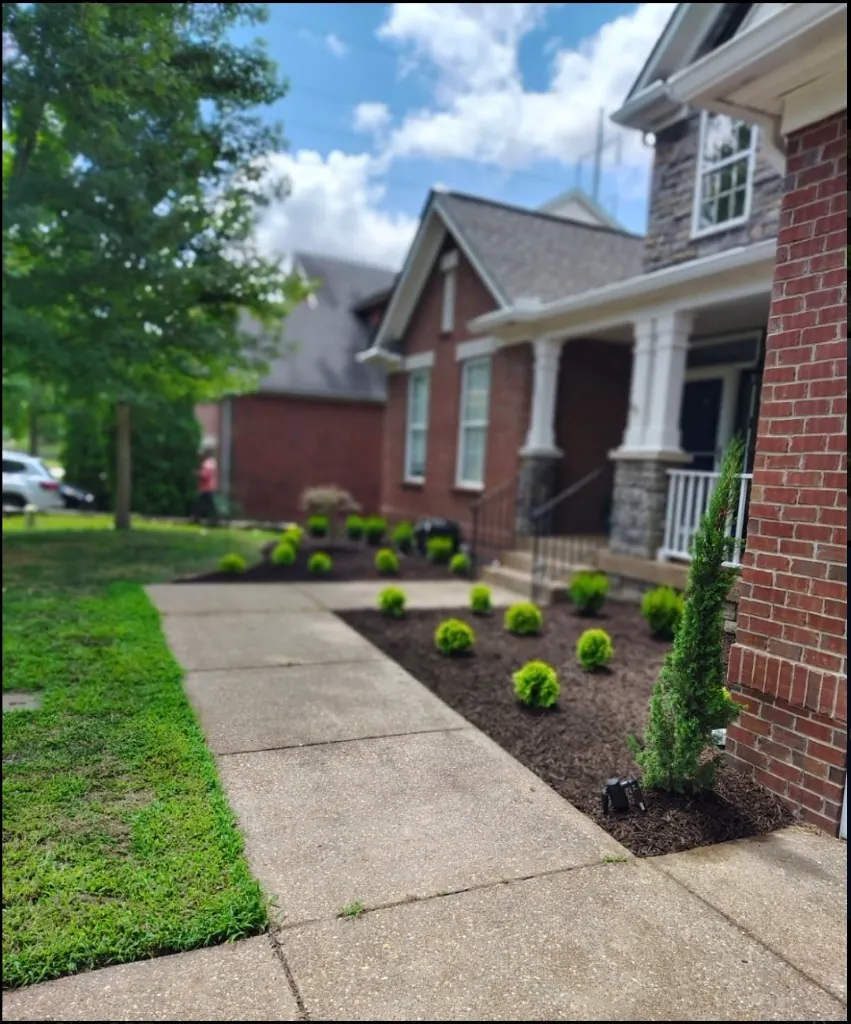
Evergreen shrubs provide year-round structure in beds. Flowering plants add seasonal interest, but they should not be placed where pruning, walkway clearance, or mature width will become a constant problem. For evergreen privacy screening and taller tree rows, see the best privacy trees for Tennessee homes guide rather than treating this page as a full privacy-tree comparison.
Native and Well-Adapted Plants
Native and well-adapted plants can be good choices when they match the site. They still need correct placement, spacing, and establishment. A drought-tolerant plant can fail if planted too deep, placed in wet soil, or crowded by larger shrubs.
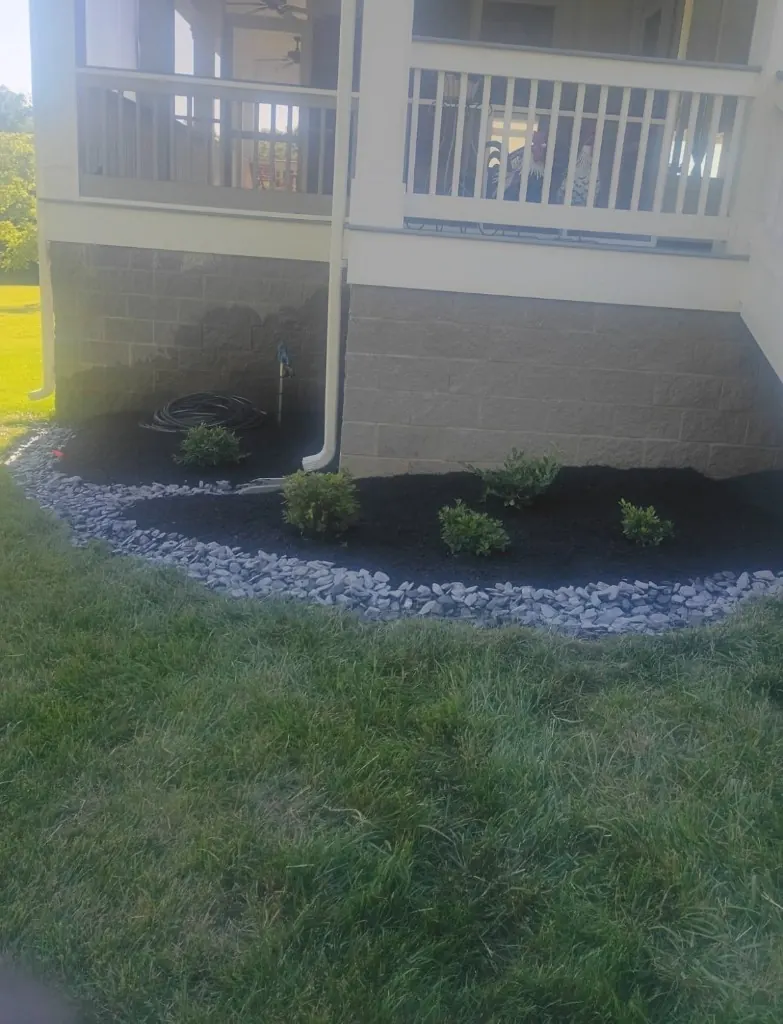
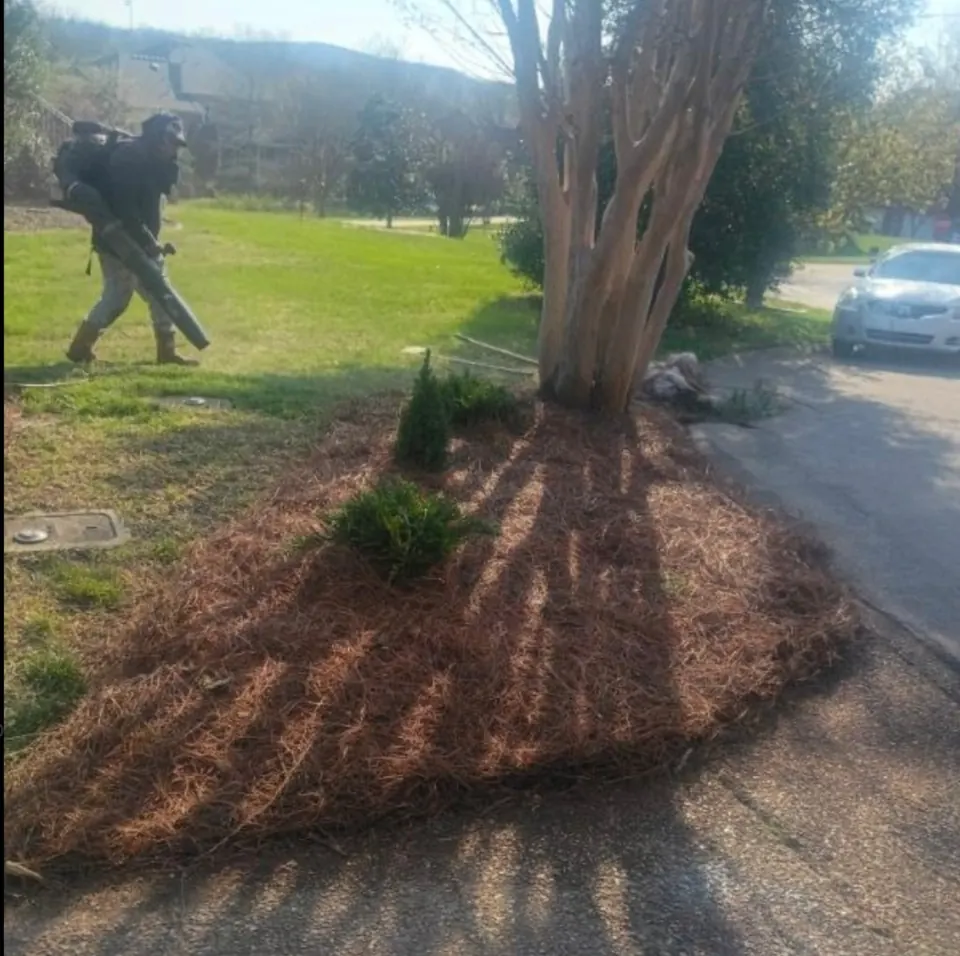
Mulch helps new plantings by moderating soil temperature and reducing evaporation, but it should not be piled against trunks or crowns.
Local Property Differences
Spring Hill and Thompson's Station yards often include newer beds that need scale and definition. Franklin and Brentwood properties may involve mature shade, established roots, and older shrubs that need selective replacement rather than a complete reset.
Plant selection should also account for long-term trimming. If a shrub needs constant cutting to stay out of a walkway, it was probably the wrong plant or the wrong location.
Seasonal Planting Timing and Establishment
Spring and fall are common planting windows in Middle Tennessee when heat stress is lower and rainfall is more predictable than mid-summer. Evergreens and many shrubs still need consistent watering through the first growing season regardless of planting month.
Establishment means roots reaching prepared soil—not just surviving the first week. Mulch helps hold moisture, but planting depth, spacing for mature width, and bed prep before install matter more than the calendar date alone.
Related Next Steps
Ready to install? Start with plant installation services, plant installation in Franklin, or plant installation in College Grove, then review Spring Hill landscape bed renovation and planting for verified plant-install photos.