Retaining Wall Lifespan in Tennessee
Published by MRX Landscaping · Last updated: August 7, 2026
Editorial guidance for Middle Tennessee homeowners from MRX Landscaping. Not a substitute for an on-site estimate.
How long do retaining walls last in Tennessee?
Retaining wall lifespan in Tennessee is a planning factor, not a fixed guarantee. Walls often perform for decades when base prep, drainage, and materials match the slope—but timber in wet soil usually fails sooner, and any system can move early if water pressure is ignored. Material choice, clay soil, freeze-thaw cycles, and maintenance all matter more than a single lifespan number.
Retaining wall lifespan in Tennessee is a planning question, not a marketing promise. Walls often perform for decades when base prep, drainage, and materials match the slope—but timber in wet soil usually fails sooner, and any system can move early if water pressure is ignored.
This guide explains typical lifespan factors for homeowners comparing wall types. When you are ready to scope work on your property, review retaining wall installation in Franklin or Brentwood retaining wall contractors for a site-specific estimate—not a generic lifespan claim.
Typical Lifespan by Material
Timber retaining walls
Timber walls often have a shorter service life because wood sits in damp soil contact. Moisture, rot, and insect damage can show up years before a masonry wall would lean, especially on poorly drained slopes.
Segmental block retaining walls
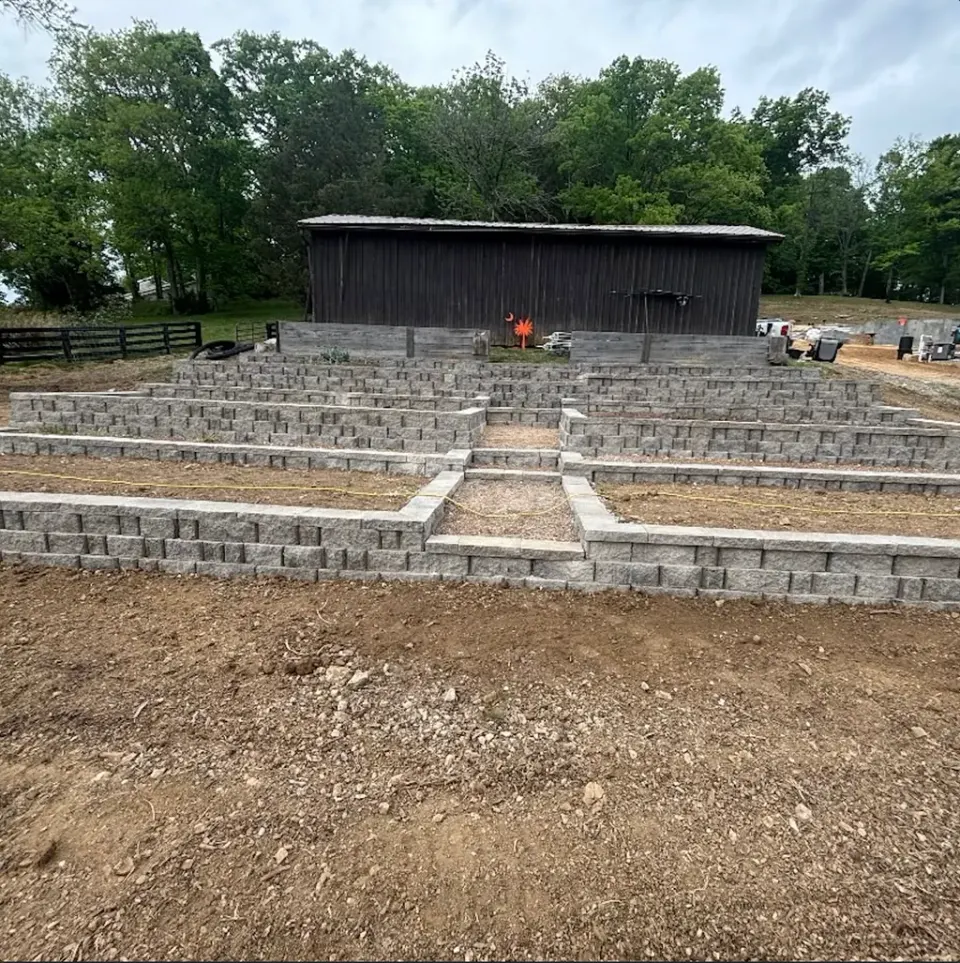
Segmental block walls can last decades when installed correctly on a compacted base with drainage stone and outlets behind the wall. Compare systems in our concrete vs block retaining walls guide before you choose a look or rebuild plan.
Poured concrete retaining walls
Poured concrete can also last decades when designed, reinforced, and drained for the load. Cracks or movement still need evaluation; concrete is durable only when water and soil pressure are managed.
How Tennessee Weather and Soil Shorten Walls
Heavy rain saturates clay soil and raises hydrostatic pressure behind the wall. Freeze-thaw cycles then expand wet soil and push on joints, caps, and timber ties. Walls on slopes in Brentwood and nearby suburbs face these loads repeatedly through storm season.
That is why hardscaping should treat the wall as a site system: grade, outlets, adjacent beds, and patio or walkway runoff all affect how long the structure stays straight.
Drainage and Maintenance That Protect Lifespan
- Keep drainage outlets clear so water can leave the backfill
- Watch for washout at wall ends after storms
- Maintain surface grade so runoff does not pool behind the wall
- Avoid stacking heavy loads or saturated soil above a wall that was not designed for them
- Inspect seasonally for leaning, bulging, or stair-step cracks
Signs of a Failing Wall—and When to Repair or Replace
Leaning, bulging, gaps between courses, tilted caps, soil washing through joints, or standing water behind the wall are signs the system needs attention. Small cosmetic issues are different from movement driven by drainage failure.
Repair can work when the cause is local and the wall is still largely stable. Replacement is more realistic when timber is rotten, courses have shifted, or drainage was never built correctly. Homeowners comparing options for retaining walls in Brentwood should evaluate the wall, soil, and water path together—not only the facing material.
Related Next Steps
For planning, compare retaining wall installation in Franklin, Brentwood retaining wall contractors, concrete vs. block wall choices, and the Franklin terraced wall project.