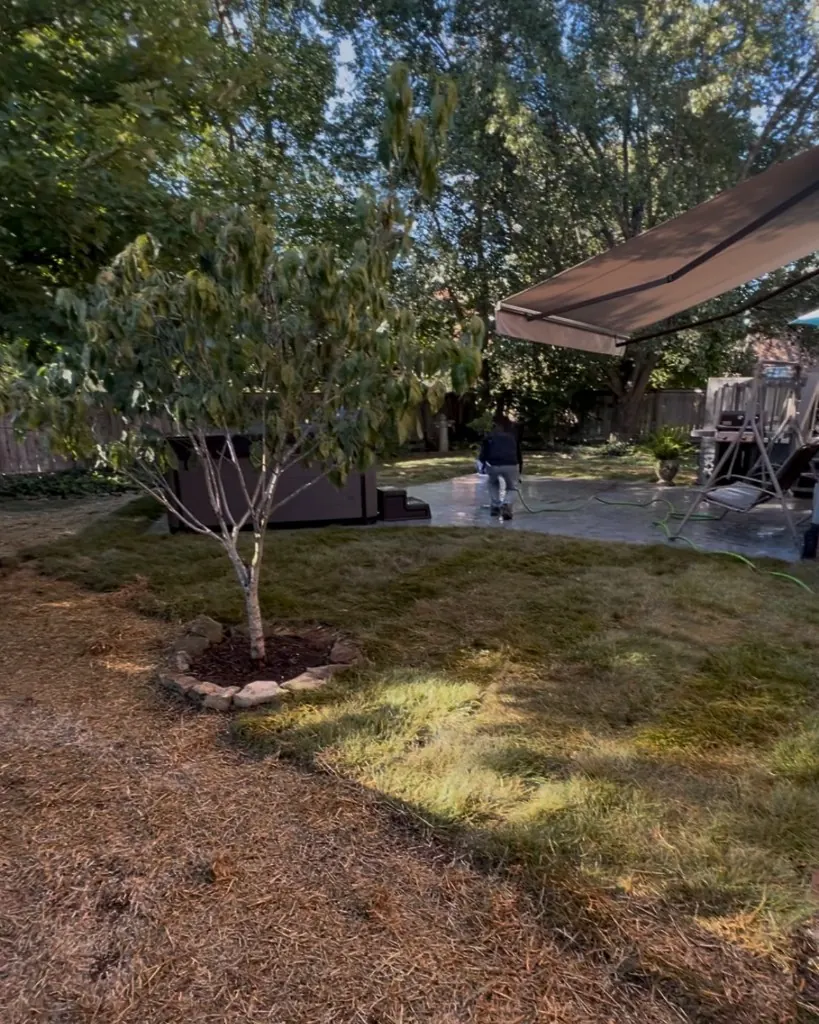
Watering New Sod in Tennessee
Published by MRX Landscaping · Last updated: August 7, 2026
Editorial guidance for Middle Tennessee homeowners from MRX Landscaping. Not a substitute for an on-site estimate.
When does new sod begin rooting in Tennessee?
New sod begins rooting as moisture reaches the prepared soil beneath the rolls and roots knit downward—there is no single day count that fits every Middle Tennessee lawn. Early establishment focuses on keeping the root zone consistently moist (not only the leaf surface), then shifting toward deeper, less frequent watering as the sod knits. Clay soils, shade, heat, and slope change how quickly that happens; light-use timing depends on season, sod type, and establishment progress.
Watering new sod in Tennessee is about helping roots reach the prepared soil beneath the rolls—not keeping the blades wet all day. Shallow daily watering encourages weak roots; deep, less frequent watering supports establishment when soil absorbs water instead of pooling.
MRX provides care guidance after sod installation so the lawn roots successfully. Light use timelines depend on season, sod type, and establishment—there is no single day count for every property. When you are ready to scope lawn work, start with sod installation.
When New Sod Begins Rooting
Rooting starts when moisture reaches the soil interface under the sod and roots begin knitting downward into the prepared grade. That progress is gradual—not a fixed calendar date. Season, sod type, shade, clay content, slope, and how consistently the root zone stays moist all change how quickly seams tighten and the lawn resists light use.
Early establishment focuses on keeping the root zone damp without flooding clay soils. As roots knit, watering usually transitions toward deeper, less frequent cycles. MRX reviews practical expectations after install; homeowners still control day-to-day watering and weather response.
Signs Sod Is Establishing
- Seams stay closed instead of opening or curling at the edges
- Turf feels more anchored when gently tugged (without tearing the surface)
- Footprints recover more quickly than in the first days after install
- Color stays more even when watering and weather stay consistent
- Dry edges along drives or slopes improve when those zones get enough water
First Weeks After Installation
- Keep sod and the soil interface moist while roots begin to knit downward
- Water deeply enough to wet the root zone, not only the leaf surface
- Avoid letting rolls dry out or shrink before roots establish
- Avoid constant saturation that keeps clay soil muddy and airless
- Limit unnecessary foot traffic until the sod knits more firmly to the soil
How Watering Changes During Establishment
Tennessee summer heat and uneven rainfall stress new lawns quickly. Deep watering encourages roots to follow moisture into amended soil. Shallow sprinkles green the top while roots stay near the surface—especially risky before the lawn is established.
As establishment progresses, many lawns need less frequent surface wetting and more root-zone depth per cycle—always adjusted for shade, wind, clay hold time, and recent rain. There is no universal Middle Tennessee schedule that fits every lot.
Clay Soil and Low Spots in Middle Tennessee
Clay-heavy Middle Tennessee soils hold water differently than sandy soils. Low spots that pool after rain may need grading correction before sod—not only adjusted watering. Persistent soggy zones kill grass even when watering habits change.
Properties in Thompson's Station and nearby areas often need a clear watering plan after sod when lots are large and hose access is limited. Plan watering access before install day so establishment is realistic.
If you are comparing sod options for a nearby lawn, start with sod installation in Brentwood for a detailed local install page, or the Thompson's Station location page for broader local landscaping context.
Signs Sod Needs Attention
- Gray-green color or curling leaf blades
- Gaps opening between sod seams
- Footprints that stay visible on the lawn surface
- Dry edges along drives, beds, or top of slopes
- Pooling water in the same low corner after every rain
Related Next Steps
Pair this guide with sod installation, sod installation in Franklin, sod installation in Spring Hill, and best season for sod installation when you are ready to scope lawn work.