Pine Straw vs Mulch: Which Is Better for Your Tennessee Landscape?
Published by MRX Landscaping · Last updated: September 6, 2026
Editorial guidance for Middle Tennessee homeowners from MRX Landscaping. Not a substitute for an on-site estimate.
Pine straw vs mulch—which is better for Tennessee landscape beds?
Neither wins for every yard. Mulch usually looks darker and more formal and is quoted by the cubic yard; pine straw is lighter, needle-textured, and often holds better on mild slopes because needles knit together. Both need bed cleanup first and clearance around trunks and crowns. Choose based on look, slope, existing materials, and maintenance—then confirm depth and prep during a free estimate.
Pine straw vs mulch is one of the most common bed-finish questions for Middle Tennessee homeowners. Both can define landscape beds, reduce bare soil, and finish planting areas—but they look different, settle differently, and ask for different maintenance habits.
MRX Landscaping installs both finishes as part of project-based mulch installation and landscape cleanups—often after bed cleanup, edging, and plant work. This guide explains the practical tradeoffs without invented price lists. For material-type comparisons among mulches themselves, see best mulch for Tennessee homes.
What Pine Straw Is
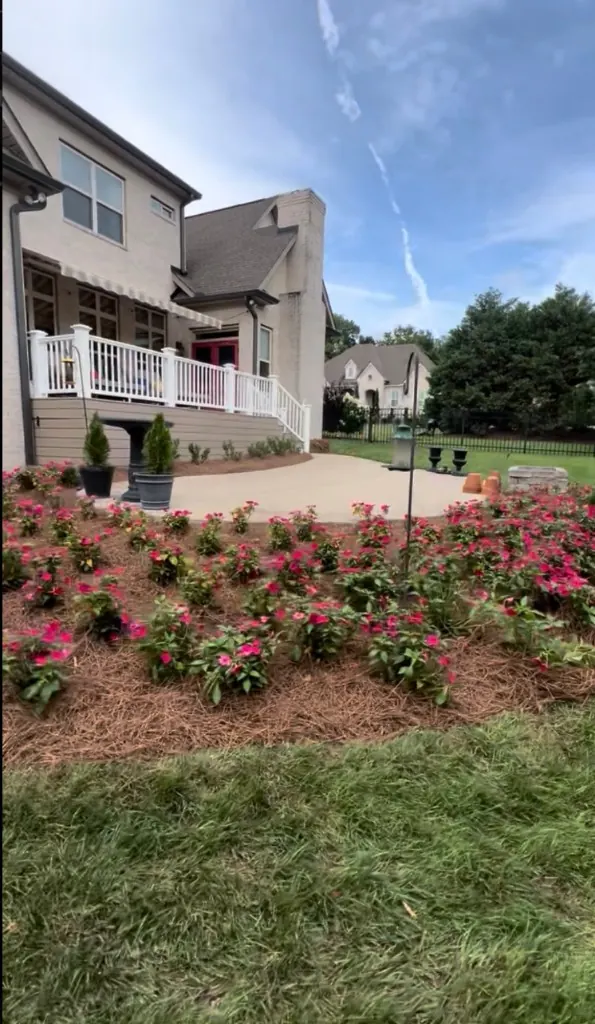
Pine straw is dried pine needles used as a landscape bed cover. It is light, nests together when layered, and gives beds a fine, needle-textured look that many homeowners associate with traditional Southern landscapes.
On MRX projects, pine straw often finishes beds after cleanup or planting—see the Arrington landscape cleanup and pine straw project and the Franklin multi-bed cleanup and pine straw refresh for verified local examples.
What Mulch Is
Mulch—usually shredded hardwood or dyed wood mulch in Middle Tennessee residential work—is a wood-based bed cover applied in a measurable depth. It darkens or browns the bed, softens edges, and breaks down into organic matter over time.
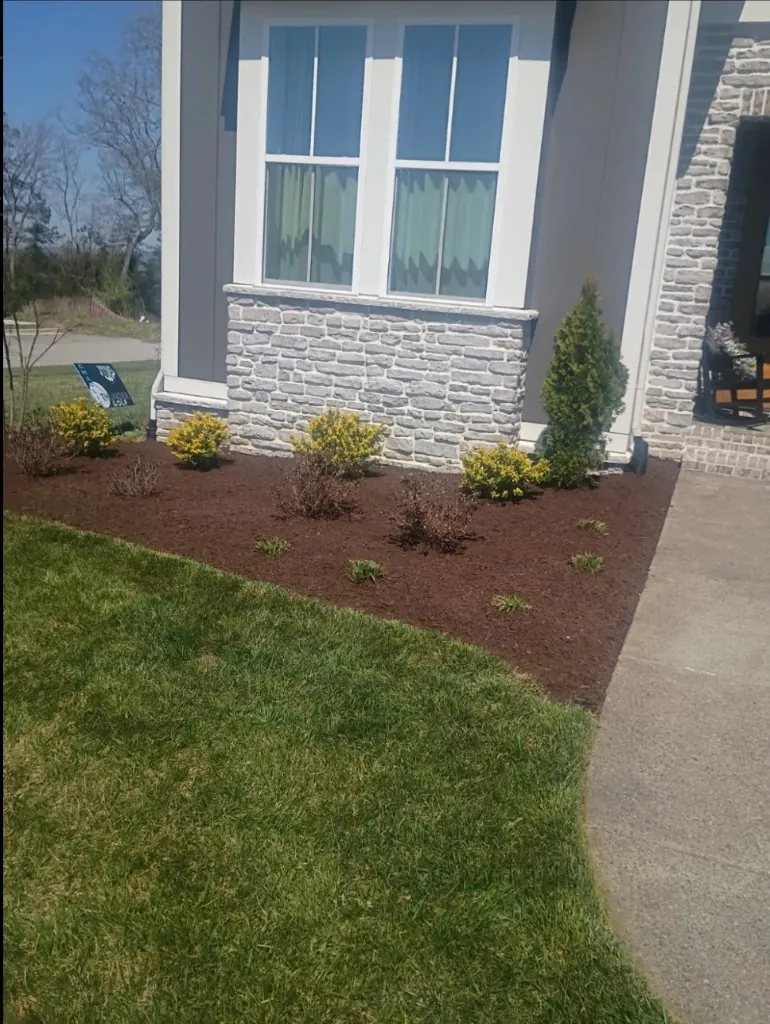
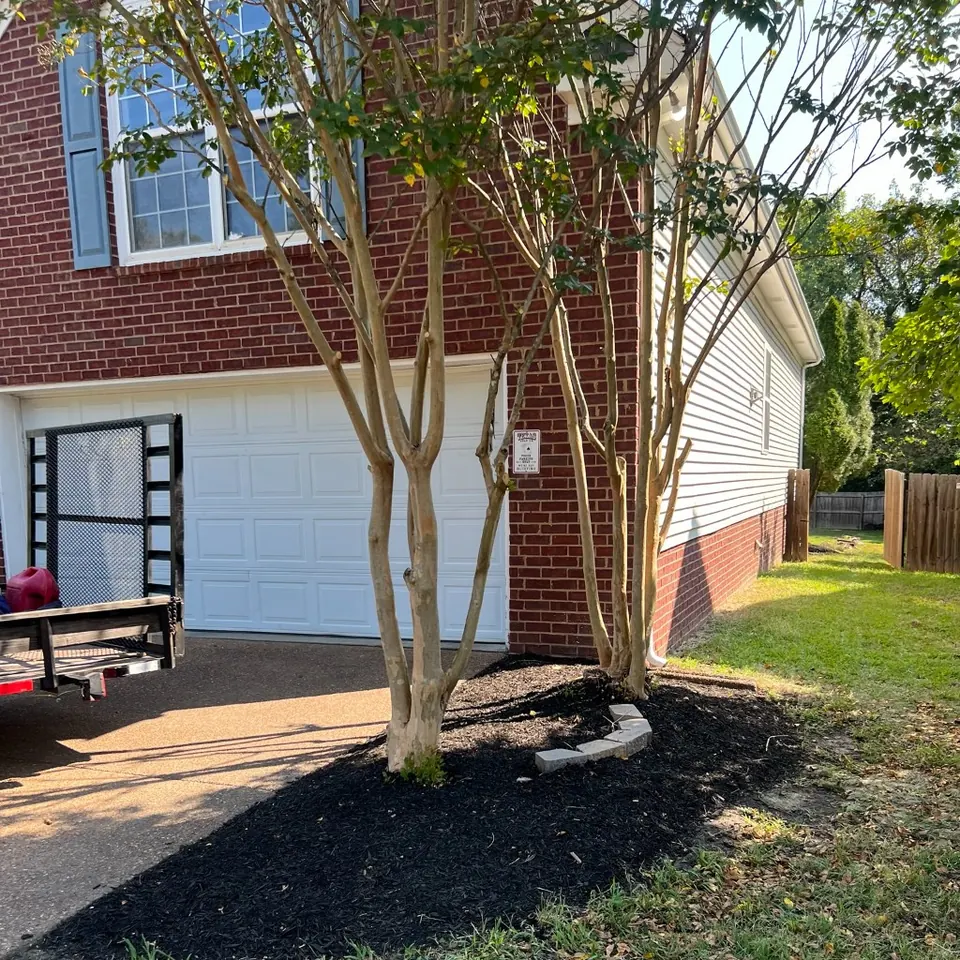
Verified mulch finishes on MRX project pages include black mulch after overgrown cleanup in Thompson's Station and brown mulch after multi-bed cleanup in Brentwood. Depth should suppress weeds without burying plant crowns or tree root flares.
Cost Considerations
Installed cost depends on bed area, depth, cleanup, edging, access, and material—not a single statewide price. Mulch is typically quoted by the cubic yard for coverage depth. Pine straw is often handled by the bale and spreads differently because of how needles nest.
Neither finish is automatically “cheaper” until bed size and prep are known. Cleanup and weed removal can outweigh the material line item. For mulch pricing factors in a local market context, see the mulch cost in Brentwood guide—those figures are educational market reference, not a substitute for an on-site estimate.
Appearance
Mulch usually reads as a solid brown or black field that contrasts hard with lawn edges, brick, and stone. Pine straw reads lighter and more textured—closer to a forest-floor finish. Neither is universally “better looking”; the right choice matches the house, plant palette, and how formal the beds should feel.
Some properties mix both: mulch in high-visibility foundation beds and pine straw in secondary or tree-centered beds. The Thompson's Station mulch and pine straw bed refresh shows that mixed-finish approach on a single property.
Weed Control
Both finishes help when beds are cleaned first and material is applied at a useful depth. Thin coverage of either product lets weeds through. Pine straw can settle into a interlocking mat; mulch relies more on depth and continuous coverage. Existing weeds under a new finish will return—cleanup first matters more than material branding.
Moisture Retention
Both shade soil and slow evaporation compared with bare dirt. Wood mulch often holds a denser layer against the soil surface; pine straw is airier but still protects roots when applied thick enough. In Middle Tennessee summers, either finish helps beds more than leaving soil exposed—especially around new plantings.
Slopes and Erosion
On mild slopes, pine straw often stays put because needles knit together. Fine shredded mulch can wash downhill more easily during heavy rain if edging is weak or depth is thin. Steep grades, concentrated roof runoff, or poorly defined bed edges can defeat either finish—and may need drainage or hardscape conversation beyond ground cover alone.
Maintenance and Replacement Frequency
Mulch fades, thins, and decomposes; many Middle Tennessee beds need a yearly refresh when depth drops or color washes out. Full strip-and-replace is different from a top-dress—see how often to replace mulch for that distinction.
Pine straw also thins and can blow or settle unevenly. Many homeowners add a lighter top layer periodically rather than ripping out every needle. Either way, keep material off trunks and shrub crowns—mulch volcanoes and straw piled against stems both create plant-health problems.
Around Shrubs and Trees
Keep root flares visible. Leave a clear ring at the base of trees and do not bury shrub stems. Both pine straw and mulch should define the bed without creating a mound against bark. Young trees that were just planted and staked still need that same crown clearance after the bed finish goes down.
What Is More Common in Middle Tennessee?
Both finishes are common across Spring Hill, Franklin, Brentwood, Thompson's Station, and nearby communities. Preference often follows house style, existing bed materials, HOA expectations, and whether the homeowner wants a darker solid look (mulch) or a lighter needle texture (pine straw). MRX installs whichever finish fits the property plan after a site review—not a one-material rule for every yard.
When to Choose Pine Straw
- You want a lighter, needle-textured Southern bed look
- Beds have mild slopes where knitting needles help hold cover
- Existing beds already use pine straw and you want a matching refresh
- Secondary beds or tree rings where a softer texture fits better than a dark mulch field
- You prefer periodic light top-dressing rather than a heavy wood-mulch depth every season
When to Choose Mulch
- You want a darker, more formal contrast with lawn edges and hardscape
- Foundation beds need a solid finished field after cleanup or planting
- You prefer wood mulch that breaks down into the bed over time
- Color consistency (including dyed brown or black) matters for curb appeal
- You are coordinating mulch with a broader landscaping or bed-renovation scope
Which Should You Choose?
Choose based on look, slope, existing materials, and maintenance—not a viral ranking. If beds are overgrown, start with cleanup before either finish. If you are still choosing among mulch products (hardwood vs dyed vs bark), use the best mulch guide first, then decide whether pine straw belongs in the same plan.
Ready for a site-specific recommendation? Request a free estimate for mulch installation—or start with mulch installation in Franklin or mulch installation in Thompson's Station when that matches your property.
Real MRX Project Examples
Pine straw examples: Arrington cleanup with pine straw, Franklin multi-bed pine straw refresh, Franklin side-and-entrance pine straw refresh, and Brentwood pine straw with plant installation.
Mulch examples: Thompson's Station overgrown cleanup with black mulch, Brentwood landscape bed cleanup with brown mulch, and Spring Hill front yard mulch. Mixed finishes: Thompson's Station mulch and pine straw bed refresh.
Pine straw vs mulch — quick comparison
| Factor | Pine straw | Mulch |
|---|---|---|
| Look | Lighter, needle texture; Southern forest-floor feel | Darker brown or black field; more formal bed contrast |
| Weed control | Works when beds are cleaned and coverage is thick enough | Works when beds are cleaned and depth is continuous |
| Slopes | Often holds better on mild slopes as needles knit | Can wash more easily on slopes without strong edging |
| Around trees & shrubs | Keep clear of trunks and crowns—do not pile against bark | Keep clear of trunks and crowns—avoid mulch volcanoes |
| Maintenance | Periodic top-dress as needles thin or settle | Yearly refresh common as depth and color fade |
| Best when | Matching existing straw beds, mild slopes, softer texture preferred | Formal foundation beds, color contrast, wood-mulch renovation scopes |