River Rock vs Mulch: Which Is Better for Your Tennessee Landscape?
Published by MRX Landscaping · Last updated: September 16, 2026
Editorial guidance for Middle Tennessee homeowners from MRX Landscaping. Not a substitute for an on-site estimate.
River rock vs mulch—which is better for Tennessee landscape beds?
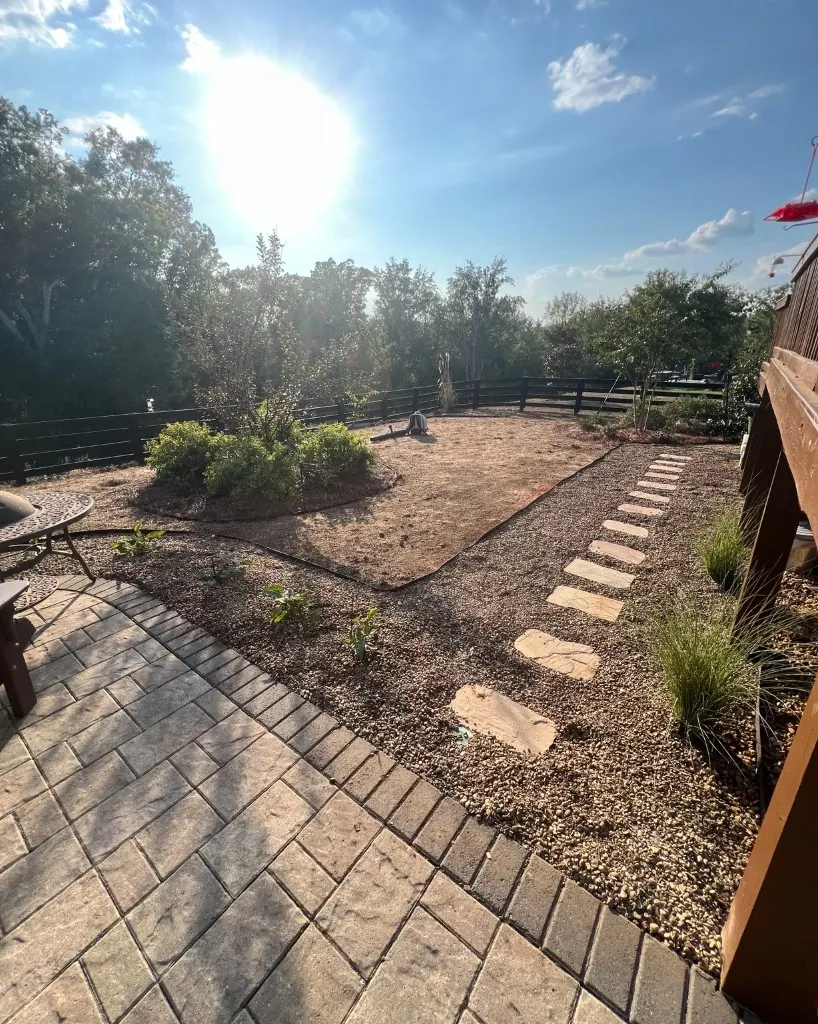
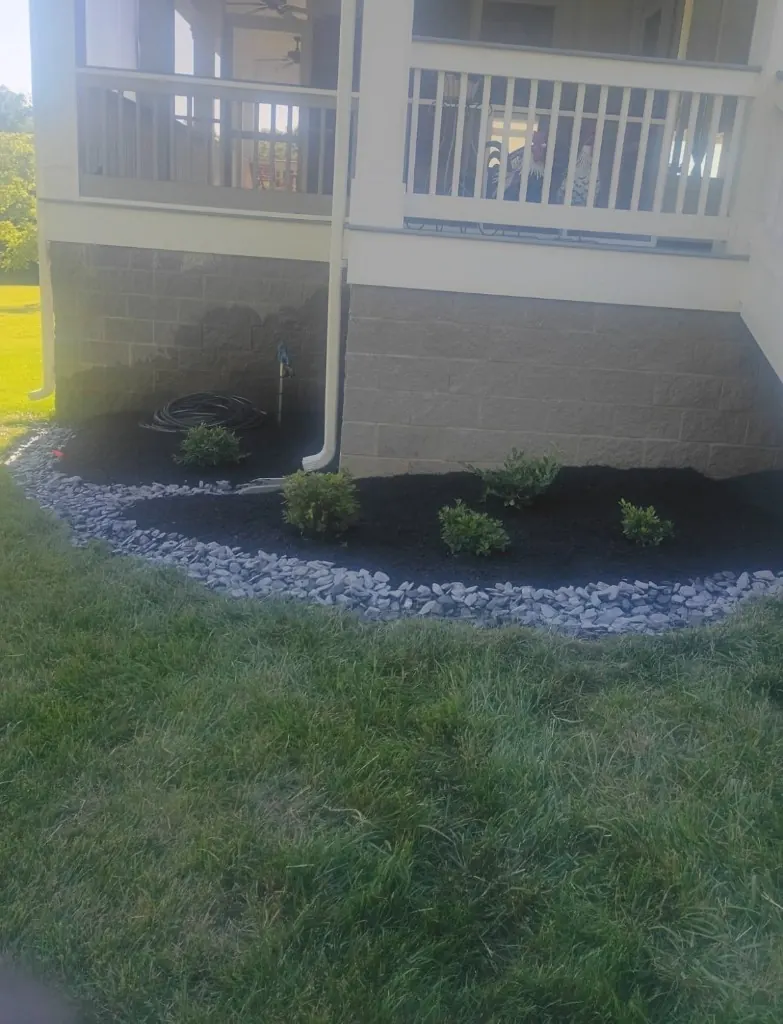
Mulch is usually better for primary planting beds that need moisture retention and cooler soil. River rock or decorative rock often costs more upfront and lasts longer as a mineral finish, but can radiate heat in full sun and still needs weed and leaf management. Many strong plans mix both—mulch or pine straw in planting fields and rock on selected edges, walkways, or drainage paths. Verified Tennessee River rock installation appears on the College Grove backyard landscape renovation (walkway, rock bed, and drainage swale); an earlier College Grove bed project also shows decorative rock as a bed-edge finish with mulch and planting.
River rock vs mulch is a different decision from pine straw vs mulch. Here the tradeoff is organic wood cover that refreshes and breaks down versus a mineral rock finish that stays in place longer but changes how beds hold heat, moisture, and plant health.
MRX Landscaping installs mulch as a primary bed finish and can install decorative rock, border stone, and Tennessee River rock as part of coordinated landscaping work. Verified project photography includes decorative rock as a bed-edge finish with mulch and planting in College Grove, plus a College Grove backyard renovation with 1.5" Tennessee River rock walkway, rock bed, and drainage swale work. This guide stays honest about that mix.
What River Rock Is
River rock is rounded decorative stone used as a landscape bed cover or accent. Homeowners often choose it for a permanent look that does not fade like dyed mulch or thin like pine straw. Sizes and colors vary; "river rock" on a residential estimate usually means a washed, rounded stone suited to beds, borders, walkways, or drainage-adjacent accents—not patio pavers or retaining-wall block.
On MRX projects, decorative rock and Tennessee River rock are typically discussed as coordinated finishes with cleanup, planting, mulch or pine straw, and walkway or bed work—not as a standalone catalog service page. Scope and stone choice are confirmed during the free estimate.
What Mulch Is
Mulch is usually shredded hardwood or dyed wood applied at a measurable depth. It darkens beds, softens lawn edges, holds moisture, and breaks down into organic matter over time. In Middle Tennessee, mulch is the most common full-bed finish on residential properties.
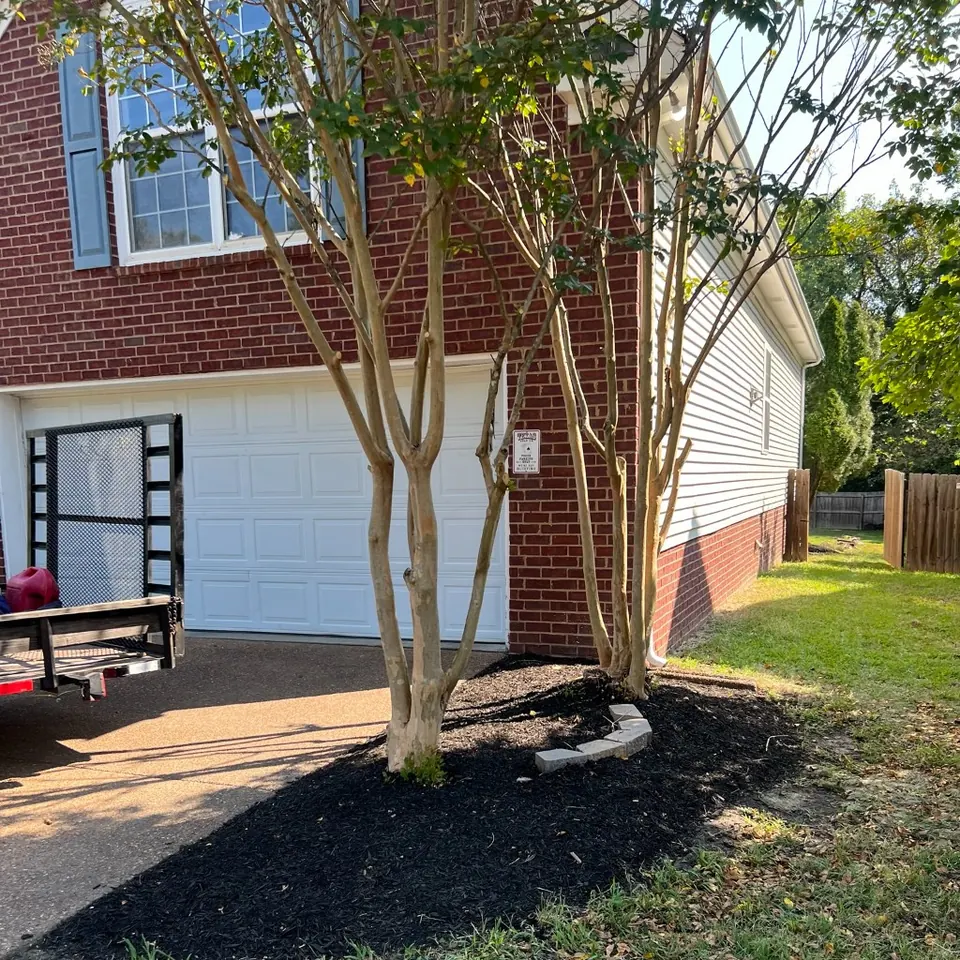
Verified mulch examples across MRX's project gallery include black mulch after overgrown cleanup in Thompson's Station, brown mulch after bed cleanup in Brentwood, and front-yard mulch refreshes in Spring Hill.
Upfront Cost Considerations
Installed cost depends on bed area, depth or stone size, cleanup, fabric or edging if used, delivery access, and labor-not a single statewide price. Mulch is typically quoted by the cubic yard for coverage depth. River rock is usually heavier per coverage area, so material and delivery can push upfront cost higher even before labor.
This page does not invent rock or mulch unit prices. For mulch pricing factors in a local market context, see the mulch cost in Brentwood guide—those figures are educational market reference, not MRX quotes. Rock scopes are priced after a site review.
Long-Term Maintenance
Mulch needs periodic refresh as depth thins and color fades—often a yearly top-dress for many Middle Tennessee beds. Full strip-and-replace is different from a light refresh; see how often to replace mulch.
River rock does not decompose the same way, so you are not "replacing color" every season. Maintenance shifts to leaf blow-out, weed pressure at the soil interface, stone migration into lawn, and occasional top-up where rock thins. Rock can still look messy if beds are never cleaned.
Weed Control
Neither finish is magic without cleanup first. Thin mulch lets weeds through; rock over dirty soil or without thoughtful prep can still grow weeds in the gaps. Landscape fabric under rock is sometimes requested, but it is not a permanent weed solution and can complicate later planting. Honest bed cleanup still comes first.
Moisture and Drainage
Mulch shades soil and helps hold moisture for shrubs and new plantings through hot Middle Tennessee stretches. River rock does not feed the soil as it ages and can change how water moves across the bed surface-sometimes helpful near downspouts or splash zones, sometimes drying for thirsty plants if the whole bed is stone.
Rock is not a substitute for fixing serious grade or drainage problems. Concentrated runoff, soggy corners, or erosion may need planning beyond a bed finish-discussed during landscaping or landscape design estimates when relevant.
Heat Around Plants
Dark rock in full sun can radiate heat around plant stems and shallow roots. That does not mean rock is "always too hot," but it is a real planning factor for sunny foundation beds and young plantings. Mulch stays cooler at the soil surface in many full-sun beds and is often the safer default around dense shrub plantings.
If you want rock for appearance, many properties use it as an edge, border, or accent while keeping mulch in the main planting field-similar to the College Grove bed installation where decorative rock finishes selected edges alongside black mulch and new plants.
Slopes and Washout
On slopes, fine mulch can wash into the lawn during heavy rain if edges are weak. Larger rock can resist washout better on mild grades, but steep slopes, concentrated roof water, or poorly defined beds can still move stone. Edging and prep matter as much as material choice.
Appearance
Mulch usually looks softer and more "planted"-a dark or brown field that frames green. River rock looks more architectural and permanent. "More natural" depends on the house: wooded lots often read better with mulch; modern or high-contrast exteriors sometimes prefer stone accents.
Comparing organic finishes only? Use pine straw vs mulch. This page is specifically rock versus mulch.
Best Use Cases for River Rock
- Bed edges, borders, and accents where you want a longer-lasting mineral finish
- Splash zones or narrow strips where organic mulch washes or stains hardscape
- Lower-maintenance look when you accept leaf cleanup and weed management in stone
- Design contrast against mulch or lawn-not necessarily converting every bed to rock
- Properties where the homeowner prefers stone texture over a wood-mulch field
Best Use Cases for Mulch
- Primary planting beds around shrubs and trees that benefit from moisture retention
- Sunny beds where heat buildup around stems is a concern
- Budget-sensitive refreshes where yearly top-dress is acceptable
- Bed renovations sequenced with cleanup and planting for a cohesive softscape finish
- Most Middle Tennessee foundation beds where a softer, organic look is preferred
Which Should You Choose?
Choose mulch when planting health, moisture, and a softer look lead the decision. Choose river rock or decorative rock when permanence, wash resistance, or edge definition lead-and be careful about heat and plant spacing in full sun. Many strong plans use both: mulch in planting fields, rock on selected edges.
Still comparing wood finishes first? Read pine straw vs mulch, then return here if stone is on the table. Ready for a site visit? Request a free estimate through mulch installation-or start from mulch installation in Franklin or mulch installation in Spring Hill when that matches your city.
Real MRX Project Examples
Tennessee River rock proof: the College Grove backyard landscape renovation documents 1.5" Tennessee River rock on a walkway and rock bed, plus a rock drainage swale—alongside pea gravel walkways, pine straw, and plantings. Decorative rock bed-edge proof remains on the earlier College Grove landscape bed installation with black mulch and planting. Neither project is a property-wide river-rock conversion of every bed.
Mulch proof (strong inventory): Thompson's Station overgrown cleanup with black mulch, Brentwood landscape bed cleanup with brown mulch, Spring Hill front yard mulch, and Franklin mulch with bed cleanup and trimming. Existing river rock visible in some Spring Hill photos was left in place during a mulch-only refresh—not newly installed on that job.
River rock vs mulch — quick comparison
| Factor | River rock | Mulch |
|---|---|---|
| Upfront cost | Often higher—stone is heavier per coverage area | Usually lower per coverage depth (quoted by the cubic yard) |
| Maintenance | Less color refresh; still needs leaf/weed cleanup | Periodic top-dress as depth and color fade |
| Around plants | Better as edges/accents; heat risk in full-sun full beds | Usually safer for primary shrub and planting beds |
| Drainage / washout | Can resist washout better on mild slopes; not engineered drainage | Holds moisture; fine mulch can wash without strong edging |
| Look | Architectural, permanent mineral texture | Softer, planted wood-cover field |
| Best when | Edges, splash strips, permanent accents, wash-prone strips | Foundation beds, planting renovations, moisture-focused softscape |